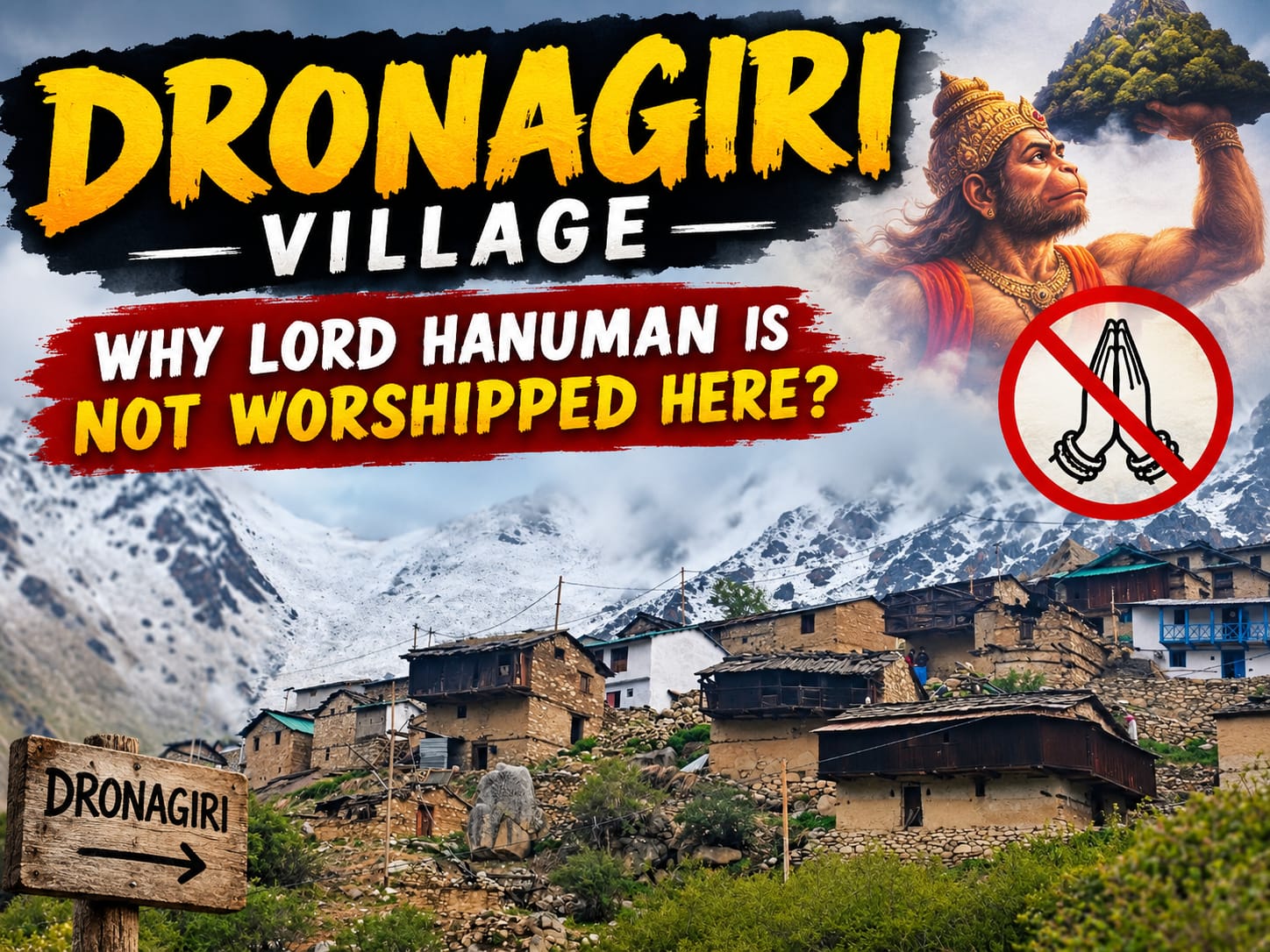
Niti Valley and Dronagiri: A Road Trip to the Last Village Before the Border and legendary place where its said hanuman jee found Sanjeevani
oplus_137429040
There are road trips and hikes where the destination is the highlight. This wasn’t one of them.The journey itself kept demanding that we slow down.With crazy traffic on badrinath highway in ending May,we were stuck in traffic for hours and took detour to Auli and skipped Joshimath.
We left Auli early in the morning, skipping joshimath following the Dhauli Ganga upstream. The familiar green mountains slowly changed character. Pine forests began thinning, the valleys became wider, the vegetation sparser, and the roads were good barring few places and after crossing tapovan and malari empty roads and rugged terrains stunned us with its beauty.
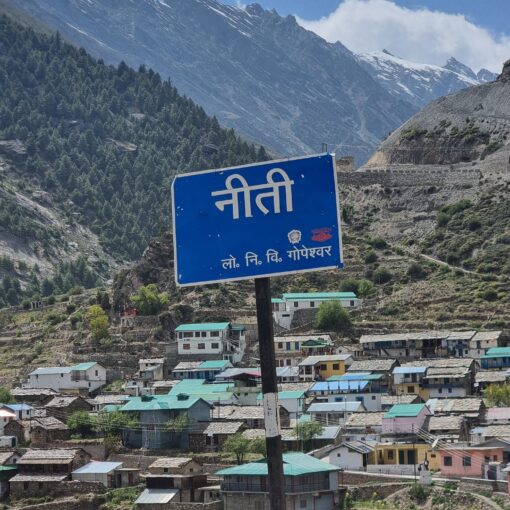
This road eventually leads to Niti, India’s last village on this route before the Indo-Tibetan border.Joshimath is last petrol pump and there is no petrol pump in Niti Valley and its advisable to carry petrol in peak tourist season. We didnt have permit to go to Rimkhim and next time we planned to go till Rimkhim.Even Niti Ultra Run was happening after few days.
Road That Keeps Changing
One moment you’re driving beside a roaring river.A few minutes later the river has disappeared hundreds of feet below.The next bend opens into a valley so vast that you instinctively slow down, not because the road demands it, but because your eyes do.There are stretches where freshly fallen rocks lie scattered across the road. Army convoys pass every now and then, reminding you that this isn’t just another mountain highway. You’re travelling through one of India’s most strategically important border regions.
Villages like Tapovan, Lata, Reni, Suraithota, Jumma, Malari,Bampa and finally Niti slowly appear and disappear along the route.
oplus_3211280
Entering Niti Valley
From crazy crowds of Joshimath and Badrinath highway, we took detour via Auli to reach Niti valley and the silence just touched us…Niti Valley doesn’t overwhelm you.It unfolds gradually.
Unlike the lush valleys of Himachal or Kashmir, this landscape feels rugged and ancient. The mountains are brown, grey and rust coloured. Snow still clings to distant ridges even in summer. We hiked to ghamshali bugyal.Located in the Niti Valley of Uttarakhand, Ghamshali Bugyal is a high-altitude meadow surrounded by towering Himalayan peaks. The hike begins from Ghamshali Village, one of the last inhabited villages before the Indo-Tibetan border, and gradually climbs through forests, rocky trails, and open grasslands before reaching the expansive bugyal. The trail is approximately 6 km one way, making it an easy to moderate day hike for reasonably fit trekkers.
The meadow sits at an elevation of around 11,000–12,000 feet, offering uninterrupted views of the Garhwal Himalayas.
One of the biggest rewards of the hike is the incredible mountain panorama. On a clear day, trekkers can admire several iconic Himalayan peaks, including:
- Dronagiri (7,066 m)
- Rishi Parvat (7,117 m)
- Lampak I and Lampak II
- Kakbhusandi Peak
We ran on open wide roads and were just happy.First day we stayed at himvaas homestay and second day we stayed at bampa and didi was so kind and always helpful. You can call and book her homestay by calling on this number. Maheshwari 9456151309.
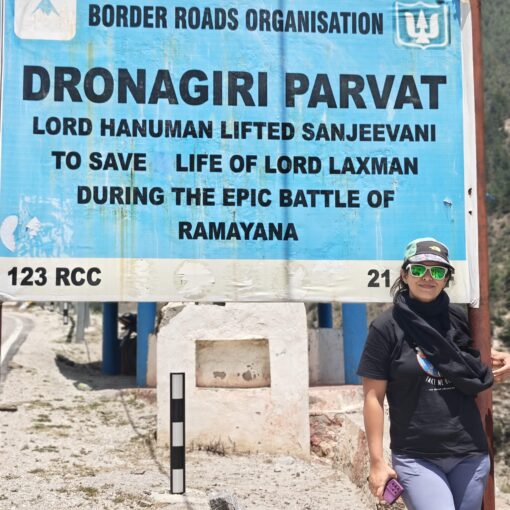
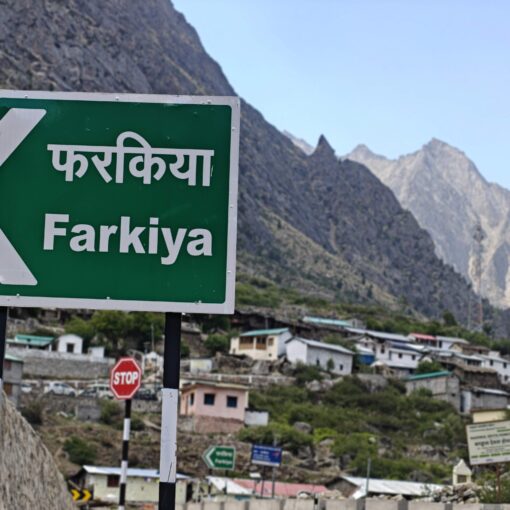
Enroute to Niti valley there is board and at distant view is Dronagiri mountain.
Dronagiri – The Myth and the Mountain
For me, one place stood out long before I reached Niti Valley.On entering Niti Valley and there is bridge and little ahead of Achanak dhaba you take a off road road till few kms. and then there is around 4 kms hile to dronagiri viallage and way to bagini glacier.It would need a strong car and you can also get drop and pick facility from achanak dhaba.Airtel doesnt majorly work at dronagiri.
Dronagiri.
Like many of us, I had grown up hearing the story of Hanuman carrying the Sanjeevani mountain to save Lakshmana during the Ramayana.What I never knew was that there is an actual Himalayan village that remembers this story very differently.Not as a heroic tale.But as a loss.
The Mountain the Villagers Still Worship
Dronagiri village sits beneath the mighty Dronagiri mountain, surrounded by alpine meadows and slopes known for their medicinal plants. For generations, the mountain itself has been worshipped by the local community as a living deity. The area is still known for its rich diversity of Himalayan herbs, which is one reason the Sanjeevani legend became associated with this region.
According to the Ramayana, Lord Hanuman was sent to find the Sanjeevani herb to save Lakshmana’s life.Unable to identify the exact plant, he lifted the entire mountain and flew towards LankaAcross most of India, this story celebrates Hanuman’s devotion and strength.
But in Dronagiri, the same story has been remembered from the perspective of the mountainThe villagers believe that a sacred part of their deity was taken away.For them, the mountain wasn’t just rock.It was their protector.
Their god.
Their identity.
Why Hanuman Isn’t Worshipped Here
This is probably the most fascinating part of Dronagiri.
The villagers don’t hate Hanuman.
They simply don’t worship him.
According to local tradition, Hanuman unknowingly damaged their sacred mountain while searching for the Sanjeevani herb. Because of this belief, there are no Hanuman temples in the village, and for generations the local customs discouraged Hanuman worship. Their devotion has always remained with Dronagiri Parvat itself rather than with Hanuman.
Standing there, I realised something beautiful.
The same story can survive for thousands of years and still belong differently to different people.
History tells one version.
Faith tells another.
The mountains quietly hold both.
Walking Through the Village
Dronagiri is not a tourist town.You won’t find cafés with mountain views or souvenir shops selling fridge magnets.
Fields carved into impossible slopes.
A handful of villagers going about their day as though the outside world barely exists.
Life here still follows the rhythm of seasons rather than calendars.
Winters are so harsh that many families migrate to lower altitudes before returning when the snow melts.
It is hard not to admire the resilience required to call this place home.
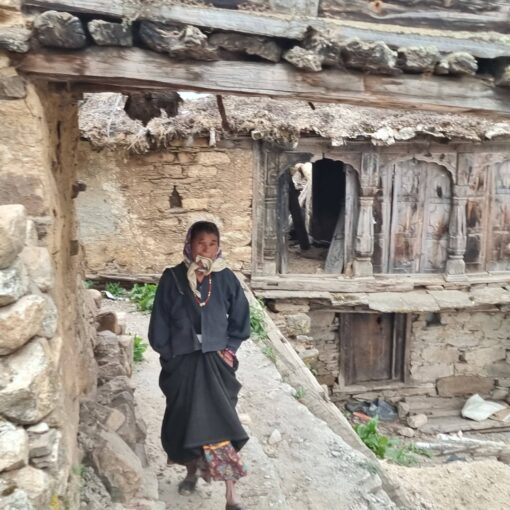
You’ll find old stone houses and a deep sense of ancientness which is so rarwe to find in major indian mountains these days.It was raining and we were drenched and some kind people gave us food and shelter.It kept raining and we couldnt go to nandikund and furthur to bagini.We planed to come post moonsoon
A Remote Himalayan Paradise
Situated at an altitude of approximately 3,658 meters (12,000 feet), Dronagiri Village offers spectacular views of majestic Himalayan peaks, including Mount Dronagiri, Changabang, and Kalanka. The region remains relatively untouched by mass tourism, making it a paradise for trekkers, photographers, and nature lovers.
The surrounding landscape features:
- Snow-covered mountains
- Alpine meadows
- Crystal-clear streams
- Dense forests
- High-altitude glaciers
The peaceful environment makes it an ideal destination for those seeking solitude and a close connection with nature.
Rich Cultural Heritage
Dronagiri is home to the Bhotiya community, who have preserved their traditional way of life for generations. Stone houses, terraced farming, colorful festivals, and local folklore continue to define the village’s identity. Agriculture, livestock rearing, and seasonal migration remain important aspects of daily life.
Visitors often appreciate the warm hospitality of the villagers and the opportunity to experience authentic Himalayan culture.
Beyond the Myth
Whether the Sanjeevani herb truly grew here, nobody can say with certainty.
Scientists have identified several medicinal plants in this region, but the legendary herb itself has never been conclusively identified. The mystery continues to attract botanists, trekkers and pilgrims alike.
Maybe that’s fitting.
Some stories aren’t meant to be solved.
They’re meant to be carried.
Drive Back
On the return journey, the road looked familiar, but somehow I wasn’t seeing the same landscape.
Places become different once you know their stories.
A mountain becomes more than a mountain.
A village becomes more than a dot on the map.
And a road trip becomes something you continue replaying long after you’ve reached home.
Niti Valley is often described as remote.
It certainly is.
But what stayed with me wasn’t the remoteness.
It was the feeling that even today, in a world where almost every place has been photographed, reviewed and geotagged, there are still valleys where stories are passed from one generation to the next not through guidebooks, but through memory.
Perhaps that’s what makes Dronagiri so unforgettable.
You don’t just visit it.
You leave carrying its story with you.
Final Thoughts
Dronagiri Village is not merely a destination—it is a living story woven into India’s spiritual and cultural heritage. Every mountain, trail, and local tradition echoes centuries of history, making this hidden Himalayan gem a truly extraordinary place to explore. Whether you visit for its legends, landscapes, or tranquil atmosphere, Dronagiri leaves every traveler with a profound appreciation for the beauty and mystery of the Himalayas.